
































Celtic won the league over 38 games as several off-field claims about the club and supporters lacked published evidence.
- Keith Jackson's 'missing minute' story generated weeks of debate, with no evidence published to support firm conclusions.
- Ally McCoist raised corruption via a phone call claim, without presenting supporting evidence.
- Kris Boyd backed trust in officials after Hibernian decisions, then criticised officials after Celtic's Motherwell penalty.
- Police Scotland said no assault reports followed title celebrations; Cammy Devlin said no Hearts players were injured.
- The Tannadice knife allegation drew major coverage, but later facts established there was no knife.
In more than forty years of supporting Celtic, I cannot remember a season quite like this one.
Not because of what happened on the pitch. Celtic won the league over 38 games through consistency, quality and resilience. The table delivered its verdict. Celtic were the best team in the country.
What made this season remarkable was what happened off it.
Time and again, discussion surrounding Celtic drifted away from football and towards controversy. Allegations became headlines. Speculation became debate. Suspicion became accepted wisdom. Yet in many of the season’s biggest talking points, certainty seemed to arrive long before evidence.
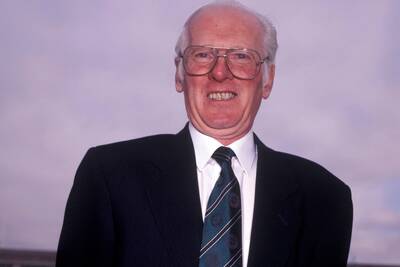
Keith Jackson’s “missing minute” story became one of the defining narratives of the campaign. It generated weeks of suspicion and endless discussion. Yet for all the noise, where was the evidence that justified the conclusions many were encouraged to draw?
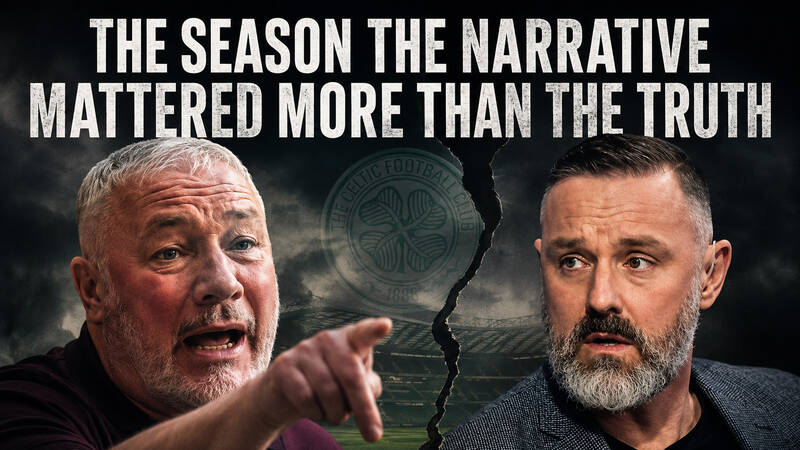
Ally McCoist’s contribution to the debate was equally revealing.
Rather than presenting evidence, he referenced concerns allegedly raised to him during a phone conversation and used those claims to introduce the possibility of corruption into the wider discussion.
That matters.
Corruption is not a throwaway accusation in football. It is among the most serious allegations that can be made about the integrity of a sport.
Such claims demand evidence.
They demand facts.
They demand scrutiny.
What they do not demand is hearsay.
The issue is not that McCoist expressed an opinion. He is perfectly entitled to do so.
The issue is that one of the most recognisable voices in British football helped inject allegations of corruption into the public conversation without presenting any evidence to support them.
Once the word “corruption” enters a debate, it inevitably shapes perceptions.
Questions are raised.
Doubts are created.
Suspicion grows.
That is precisely why those making such suggestions have a responsibility to ensure they are supported by more than second-hand claims and unverified conversations.
In any serious discussion, evidence must come before accusation.
Throughout much of this season, that principle appeared to be forgotten.
The reaction to Celtic’s late penalty against Motherwell exposed another inconsistency.
Only days earlier, following several contentious decisions that went against Celtic against Hibernian, supporters had been told to trust referees, trust VAR and trust the process. Yet when a major decision favoured Celtic against Motherwell, the tone changed dramatically.
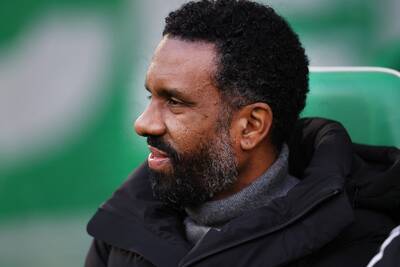
No figure embodied that inconsistency more than Kris Boyd.
When decisions went against Celtic, patience and trust in the officials were the message. When a decision benefited Celtic, the officials themselves became the story.
Supporters are entitled to ask why confidence in the process appears so dependent on the outcome.
If trust in officials is the standard, then it must apply universally.
The same principle cannot be defended one week and discarded the next.
The same pattern emerged following Celtic’s title celebrations.
Comments from pundits, statements from Hearts and widespread media coverage created the impression that serious incidents had taken place involving Hearts players and supporters.
Yet as more information emerged, that narrative became increasingly difficult to reconcile with the facts.
Police Scotland stated that no reports of assaults had been made.
Hearts midfielder Cammy Devlin later confirmed that no Hearts players had been injured.
Those developments should have prompted serious reflection about the certainty with which some allegations had been reported and discussed.
Instead, many supporters were left with the impression that the original claims generated far more attention than the facts that followed.
Once again, accusations dominated the headlines while clarification struggled to achieve the same prominence.
But perhaps no story better illustrates the concerns of Celtic supporters than the so-called knife incident at Tannadice.
The allegation was serious. The coverage was extensive. The implication was that a Celtic supporter had threatened officials with a knife.
It was a story that dominated headlines and generated widespread outrage.
Yet when the facts emerged, there was no knife.
One of the most serious allegations levelled at Celtic supporters all season collapsed under scrutiny.
The obvious question followed: where was the equivalent outrage when the story unravelled?
Where was the sustained examination of how such a serious allegation gained traction in the first place?
Where was the accountability?
The issue was not simply that the original reports proved inaccurate. It was that the correction never appeared to attract anything like the same attention as the allegation itself.
Accusations made headlines.
Clarifications did not.
For many Celtic supporters, that became the defining theme of the season.
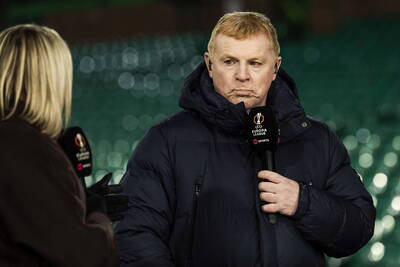
Craig Gordon has become the latest figure to raise concerns about perceived injustices. He is entitled to his opinion, as every player, manager and pundit is. What opinion cannot do, however, is replace evidence. Without evidence, football debate quickly drifts into speculation rather than serious analysis.
The Question of Balance
Scottish football is a small world. Former players and managers inevitably move into broadcasting and journalism. Their experience adds value to the conversation.
The issue is not background.
The issue is balance.
When some of the loudest voices driving controversy around Celtic come from individuals with strong historical connections to Rangers, supporters are entitled to ask whether the same standards of scrutiny are being applied consistently.
Ally McCoist, Kris Boyd, Andy Halliday and others are perfectly entitled to their opinions.
Equally, supporters are entitled to question whether those opinions are always applied evenly.
References to “tainted titles”, repeated suggestions of corruption and a persistent focus on controversy over achievement have contributed to a perception that Celtic’s success is too often viewed through a lens of suspicion.
Whether that perception is fair or not, it exists. Ignoring it will not make it disappear.
Trust in football’s media depends on the belief that standards are applied consistently. Once that trust begins to erode, rebuilding it becomes difficult.
Where Was Celtic?
Amid the noise, one question grew louder.
Where was Celtic’s voice?
As allegations mounted and narratives gathered momentum, supporters found themselves defending the club’s reputation across social media, radio programmes and online platforms.
The club itself remained largely silent.
That silence was striking.
Many supporters expected a stronger defence of the club, its supporters and its reputation when claims emerged that they believed were inaccurate, exaggerated or unsupported.
Perhaps the board believed the truth would ultimately prevail.
In many cases it did.
The problem was that by then the headlines had already been written and public perceptions had already been shaped.
In modern football, reputation matters.
Allowing others to define the narrative carries consequences.
That is why many supporters continue to ask why the club appeared so reluctant to challenge narratives they believed were unfair.
Accountability Matters
One notable exception throughout much of the season was Mark Guidi, whose approach often appeared grounded in verification rather than speculation.
That should not be unusual.
It should be the standard.
Because ultimately, this debate is not about Celtic, Rangers, Hearts or individual pundits.
It is about accountability.
Who is held accountable when serious claims prove unsupported?
Why do accusations receive banner headlines while corrections receive a fraction of the attention?
What responsibility do journalists, broadcasters and commentators have when shaping public perception?
Who asks why the “missing minute” generated weeks of speculation but failed to produce the evidence many believed would follow?
Who asks why the knife story received such prominent coverage, yet the fact there was no knife received nowhere near the same attention?
Who asks why claims of assaults dominated discussion, while Police Scotland’s statement that no assaults had been reported barely generated comparable scrutiny?
These are not questions about rivalry.
They are questions about standards.
Good journalism demands evidence.
Good journalism resists the temptation to draw conclusions before the facts are known.
And good journalism is prepared to scrutinise its own mistakes as rigorously as it scrutinises the mistakes of others.
For many Celtic supporters, this season will be remembered not simply for another league title, but for the extent to which that achievement was overshadowed by narratives that too often appeared to outpace the evidence.
The lesson should be a simple one.
Facts matter.
Evidence matters.
And if Scottish football is to retain credibility, truth must always matter more than the narrative.