












VAR audio and official confirmations followed criticism of Celtic’s Motherwell penalty and the Hearts pitch invasion.
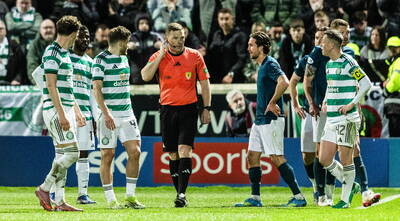
- VAR audio showed officials reviewed the available angles before awarding Celtic a penalty against Motherwell.
- Keith Jackson promoted a “missing minute” theory before the released audio explained the decision-making process.
- Celtic apologised for the Tynecastle pitch invasion and accepted responsibility for what happened.
- Police Scotland confirmed no formal complaints were made over alleged assaults on Hearts players.
- The SPFL confirmed Hearts v Celtic concluded and was not abandoned.
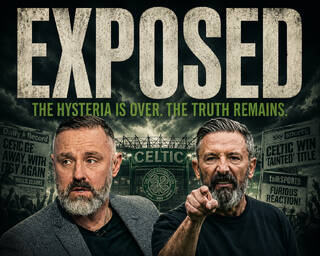
Now that the dust has settled, the VAR audio has been released, the official explanations have been made public, and the sensational headlines have started to unravel, a serious question needs to be asked:
Who is going to be held accountable for the hysteria that engulfed Scottish football after Celtic‘s victories over Motherwell and Hearts?
For nearly two weeks, sections of the Scottish media and a familiar cast of pundits and former Rangers figures whipped themselves into a frenzy.
Kris Boyd, Ally McCoist, Andy Halliday, Derek McInnes, Keith Jackson, Jim White, Hugh Keevins and others dominated the discussion with a constant stream of outrage, suspicion and accusation aimed squarely at Celtic. Boyd is a former Rangers striker. McCoist is one of Rangers’ most iconic former players and managers. Halliday is a former Rangers captain. McInnes is a former Rangers player. Jackson has spent years being viewed by many supporters as sympathetic to Rangers narratives. Jim White has built a career around generating debate and controversy, often giving a platform to the loudest voices in Scottish football. Yet these are among the figures most frequently presented as objective commentators whenever Celtic are involved.
The question Celtic supporters are entitled to ask is simple:
Why does every controversial decision involving Celtic become a national emergency while controversy elsewhere is routinely treated as part of football?
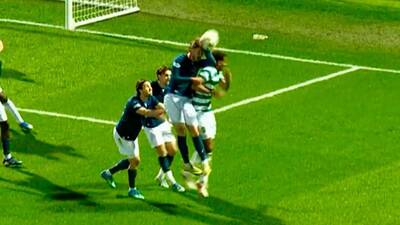
The Motherwell penalty became the centrepiece of the outrage.
The same voices who regularly tell supporters to “trust the officials” suddenly abandoned that principle the moment a major decision benefited Celtic. Kris Boyd was one of the loudest voices declaring the officials had got it wrong, presenting opinion as certainty and pouring fuel onto an already toxic debate. Yet when controversial decisions had gone against Celtic only days earlier, the message was very different: trust the process, trust VAR, trust the referees.
Which is it?
You cannot demand faith in officials one week and declare them incompetent the next simply because the outcome does not suit your narrative.
The subsequent release of the VAR audio completely undermined the hysteria. Officials discussed the incident, reviewed the available angles and arrived at a decision they believed was correct. The fantasy that a penalty had somehow been manufactured out of thin air simply did not survive contact with the evidence.
Yet that did not stop days of outrage.
Boyd delivered another television meltdown. McCoist questioned the decision. Halliday joined the criticism. Radio phone-ins, television panels and newspaper columns became dominated by outrage long before the facts had emerged.
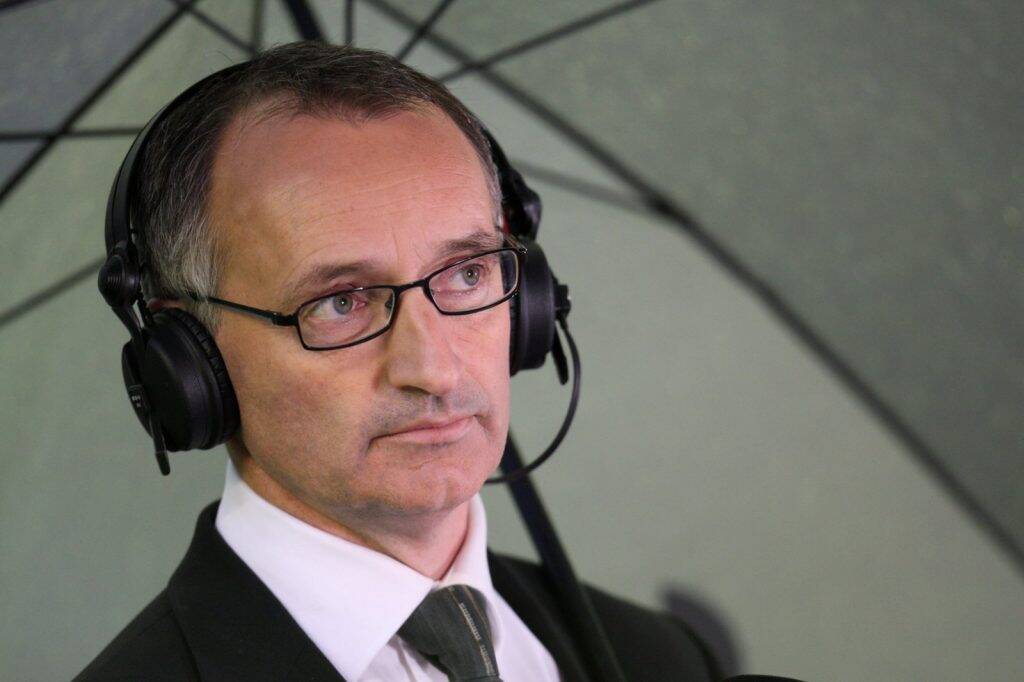
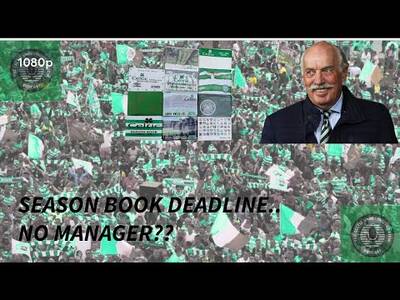
Then came Keith Jackson’s infamous “missing minute” theory.
For days, Jackson attempted to imply some great mystery sat at the heart of the decision-making process. Scottish football was encouraged to believe there was something suspicious, something hidden, something not being explained.
Then the audio arrived.
The theory collapsed.
The mystery disappeared.
The grand scandal became another example of headlines first and facts later.
Jackson was left looking like a journalist who had invested more faith in a conspiracy theory than in waiting for the evidence. Instead of calming tensions, the coverage intensified them. Instead of informing supporters, it encouraged suspicion. Once the facts emerged, the story quietly faded away, but the damage caused by the speculation had already been done.
Yet no lessons were learned.
The Hearts match immediately became the next vehicle for outrage.
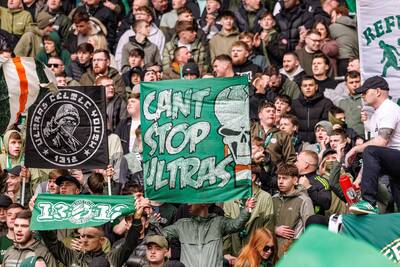
Nobody sensible defends pitch invasions. Celtic themselves apologised and accepted responsibility for what happened.
But what followed went far beyond legitimate criticism.
Hearts released statements carrying serious implications. Tony Bloom referenced alleged assaults. Derek McInnes added his voice to the outrage. Broadcasters and newspapers amplified every allegation as if they had already been proven.
The language used was inflammatory.
The tone was accusatory.
The objective appeared to be creating the impression that Celtic had somehow crossed a line beyond anything Scottish football had seen before.
Programmes fronted by figures such as Jim White devoted hour after hour to controversy, outrage and speculation. Listeners were bombarded with allegations and theories before all the facts had been established. Instead of acting as a brake on the hysteria, too much of the mainstream media seemed determined to accelerate it.
And now?
Police Scotland have confirmed there were no formal complaints made regarding alleged assaults on Hearts players.
The SPFL confirmed the match had concluded and had not been abandoned.
The narrative that Celtic somehow won a title because a pitch invasion prevented football from continuing has completely fallen apart.
The reality is that McInnes wanted the game stopped. The match officials did not agree. The governing bodies confirmed the correct procedures were followed. Yet supporters were subjected to days of commentary suggesting there was something improper about events when the evidence ultimately pointed elsewhere.
Again, where is the accountability?
Where are the apologies?
Where are the corrections from those who spent days fuelling anger before the facts were known?
Because this is bigger than football rivalry.
Words matter.
The people involved are not anonymous supporters posting online. They are highly paid pundits, broadcasters, journalists and former players with huge platforms and significant influence.
When former Rangers players and Rangers-associated media personalities dominate discussions involving Celtic, their responsibility increases, not decreases.
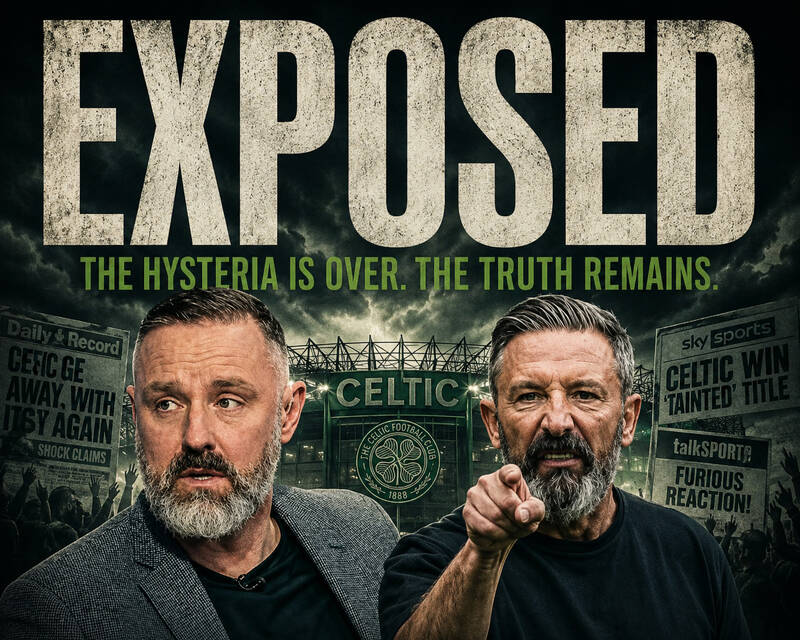
Sky Sports, talkSPORT, the Daily Record and other major platforms cannot continue presenting outrage as analysis while ignoring the consequences of what is being said.
Repeatedly portraying Celtic as beneficiaries of corruption, incompetence or preferential treatment creates hostility.
Repeatedly presenting speculation as fact creates hostility.
Repeatedly framing Celtic supporters as villains creates hostility.
And once those narratives take hold, they are almost impossible to pull back, even when the evidence eventually disproves them.
The hypocrisy is staggering.
When decisions go against Celtic, supporters are told to accept it.
When decisions favour Celtic, demands for investigations begin.
When Celtic complain, they are accused of paranoia.
When others complain about Celtic, it becomes front-page news.
Supporters see it.
Supporters hear it.
Supporters are tired of it.
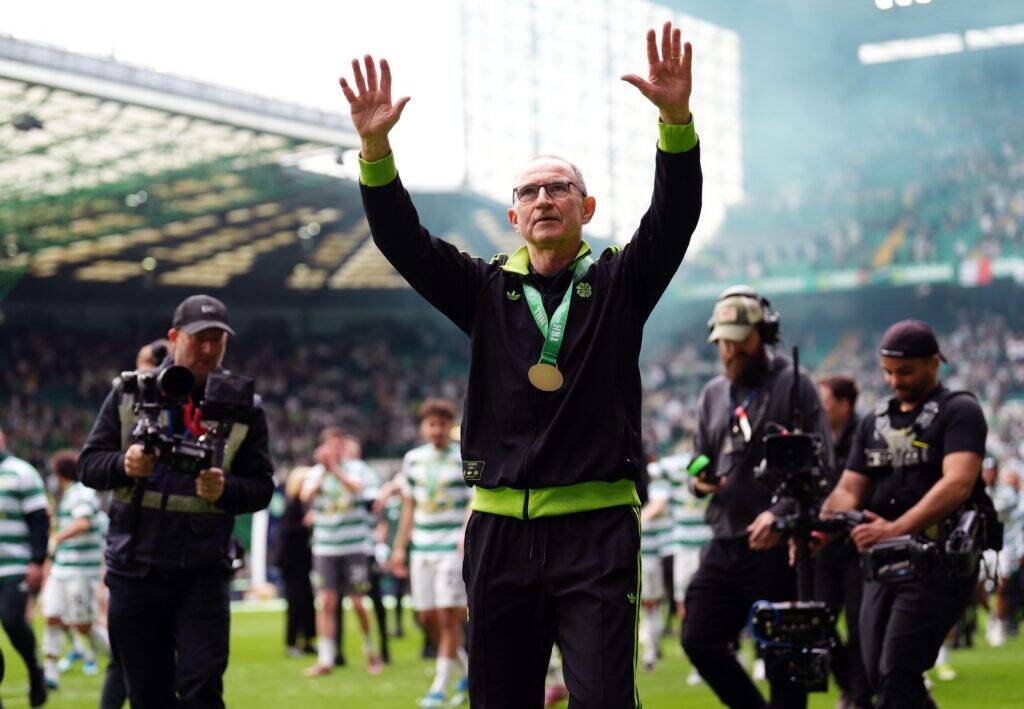
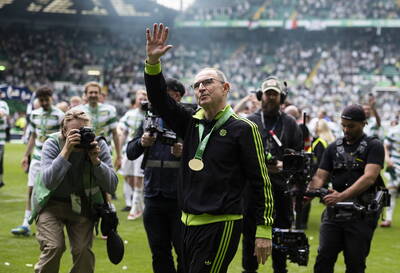
What has perhaps frustrated Celtic supporters most is that this entire saga overshadowed what should have been the central story: Celtic winning yet another league title through consistency, quality and results over the course of an entire season.
Instead of discussing Celtic’s football, too many in the media seemed determined to discuss everything but Celtic’s football.
Instead of analysing another championship-winning campaign, they searched for controversy.
Instead of celebrating sporting achievement, they searched for scandal.
Every celebration became a controversy.
Every decision became a scandal.
Every success became an investigation.
At some point people are entitled to ask whether this obsession with finding fault in Celtic says more about the commentators than it does about Celtic themselves.
Nobody is asking for Celtic to be protected from criticism.
Nobody is asking for referees to be beyond scrutiny.
What Celtic supporters are asking for is consistency, honesty and accountability.
The same standards applied to everyone.
The same demand for evidence before accusations are broadcast.
The same scrutiny applied to pundits and journalists when they get things spectacularly wrong.
Because the Motherwell controversy has now been examined.
The Hearts controversy has now been examined.
The VAR audio has been released.
The authorities have spoken.
The police have spoken.
The facts are now clear.
And those facts have not matched the hysteria.
So perhaps it is finally time for the noise to stop.
Perhaps it is time for Scottish football’s permanent outrage industry to move on.
And perhaps it is time for Boyd, McCoist, Halliday, McInnes, Jackson, White, Keevins and the rest of the familiar anti-Celtic chorus to reflect on how often their certainty collapses when evidence finally arrives.
Because from a Celtic perspective, this has never looked like balanced analysis.
It has looked selective.
It has looked inconsistent.
It has looked driven more by outrage than objectivity.
The truth has emerged.
The conspiracies have collapsed.
The accusations have been challenged by the available evidence.
The hysteria should end here.
Whether the people who fuelled it will ever be held accountable is another question entirely.